
Marion Township Previous Residents by Era
Different sources answer different parts of an address history. A deed may identify the people who transferred a parcel. A directory can put a printed name at an address in one period. Newspaper, cemetery, and probate material can test a later absence or family connection. Marion Township research is strongest when each era is matched to the source actually held locally, instead of expecting a modern property screen to resolve the nineteenth century.
| Source | Years It Covers | Where Held | What It Shows |
|---|---|---|---|
| Early deed abstracts | 1821–1832 | FamilySearch Library catalog; verify at Recorder | Grantor, grantee, signed and recorded dates, book/page, legal-description clues |
| County marriage microfilm | 1824–1964 | Marion Public Library Local History Room | Family-network evidence around an address trail |
| Birth and death registers | 1867–Dec. 19, 1908 | Marion Public Library microfilm | Event evidence before the certificate era |
| Marion Star microfilm | Oct. 8, 1878–Dec. 2019 | Marion Public Library | Obituaries, social notices, property context, and address leads |
| Directories and phonebooks | 1915–2022 | Marion Public Library, paper and microfilm | Period resident or business name and address snapshots |
| Obituary card file | 1985–2009 | Marion Public Library, paper | Decedent name, death date, and newspaper date |
Start with the closest documented source. A modern property or deed question usually begins with the parcel, while a pre-1915 household question may begin with newspaper microfilm, vital-register evidence, or the early deed abstracts. There is no published earliest year for the Recorder's electronic index, so do not assume a missing web result means the recorded instrument is absent.
Note: A source's date range shows when it can assist, not that every Marion Township address appears in every record.
Marion Township Address History Starts With a Parcel
The Marion County Auditor property search is the right modern starting point because it accepts a parcel, owner, or structured address. Its optional fields include House #, Direction, Street Name, Street Type, sale dates, buyer or seller name, and location filters such as Townships, tax districts, school districts, and neighborhoods. The Township filter matters because a postal Marion label does not by itself establish whether a parcel sits in Marion Township, inside the City, or elsewhere.
Record the parcel number, situs address, legal description, current listed owner, tax district, and any sale date before opening another system. A situs address is the property being taxed. A tax mailing address is where correspondence is sent. The legal description is the lot, block, subdivision, or tract language carried in land records. Only the legal description can reliably bridge a changed street number, a rural description, or a re-platted lot.
Marion County Auditor
Property roll, parcel data, tax district, sales and map access. 222 W. Center St., Marion; 740-223-4020. Weekdays 8:30–4:30.
Marion County Recorder
Recorded deeds, plats, mortgages, releases, liens, and certified-copy requests. 222 W. Center St., Marion; 740-223-4100.
Those two offices hold complementary records. The Auditor maintains the tax and parcel side. The Recorder maintains instruments placed in the land records. Neither record type establishes everyone who lived at a property.
Tracing Marion Township Previous Residents Through Deeds
Use the parcel information to enter the Recorder AVA land-record index. Its address-search control is disabled for this county, so the dependable route is party name, book/page, parcel, or legal-description searching. AVA supports party, recording-date, document-number, document-type, book/page, subdivision, lot, block, parcel, municipality, and tract-description fields. It also supports wildcards. Narrow a broad name result with dates, parcel, legal description, or document type rather than relying on a first result screen.
- Search the Auditor record by current address or parcel, then copy the legal description and current owner.
- In AVA, locate the deed that conveyed title to that owner. Note its recording date, instrument or book/page number, parties, and legal description.
- Use the prior party who conveyed the parcel as the next name to research, checking that the legal description still follows the same land.
- Repeat the process backward, branching to plats or subdivision records when a lot or block description changes.
- When the electronic trail ends, ask the Recorder about the original book, images, and copy procedure rather than inventing an online cutoff.
- Grantor
- The party who conveys an interest in a recorded instrument.
- Grantee
- The party who receives that interest.
- Chain of title
- The sequence of recorded transfers for the same parcel or legal description.
- Legal description
- The land identifier used in deeds and plats. It can outlast a street-number change.
Recorder detail records can display document number, document type, recorded date and time, book/page, indexed parties and roles, legal description, associated instruments, and image-page count. Image availability and price were not confirmed for every document. A recorded deed demonstrates a land transaction, not a complete history of past residents.
Marion Township Deed Books 1–4
Marion County was founded in 1820, and the oldest documented land-research fallback is unusually concrete. FamilySearch catalogs Early deed abstracts of Marion County, Ohio, Books 1–4 for 1821–1832. The work is indexed with book and page, signed and recorded dates, grantor and grantee; some entries add amount, description, and witnesses. It is a physical FamilySearch Library book, not a promise that every original page is open as a digital image.
Use the abstract as a finding aid. Carry the book/page and party names back to the Recorder or another primary repository, then compare the legal description against later deeds. Older Marion Township land may be a tract, a rural description, or a later subdivision rather than the modern street address. This 1821–1832 record span is a real local starting point for a deep property history, not a reason to guess at a residence from a deed alone.
The FamilySearch catalog for Marion County deed books provides the captured view of the early-record finding aid.
The catalog identifies the book-level resource; the Recorder or repository copy remains the record to verify before making a land-history claim.
Marion Township House-History Research
Marion Public Library has taught a three-session If Walls Could Talk course about when a house was built, structural changes, prior occupants, records and resources, and physical neighborhood clues. That course makes the Library a documented help point for a careful house history. Use its reference desk or Local History Room for current help and for the records most likely to fit the era. A course description is not proof of a particular address history, but it points to a local research method grounded in source comparison.
Township zoning can add a later physical-change record. The Township Zoning Inspector keeps applications and actions under the zoning resolution, though no public permit database with address-search fields was found. A narrow Ohio Public Records Act request can identify a situs address, a year range, and the requested zoning permit application or final action. That file may identify an applicant or project date, but it is not a resident list.
Note: Ask for a bounded zoning record by address and date range, because Marion Township has no confirmed public permit-search portal.
Marion Township Past Residents in Print
Land transfers are only one part of an address story. Marion Public Library holds directories and phonebooks for 1915–2022 on paper and microfilm, plus the Marion Star run and obituary cards. Select the directory volume closest to the target year, preserve the exact printed spelling and address, then check earlier and later available volumes. A name disappearing can reflect a move, death, marriage, a changed address, or an omitted listing. It does not prove a property was empty.
Pair each dated directory snapshot with the federal census that is open under the 72-year rule. The 1950 census is public, while later schedules are not yet public. Newspaper notices, obituary cards, probate material, and cemetery records can test the years between those snapshots. The publishers, shelves, and entry-reading cautions belong on the Marion Township city directory collections page, so the address trail can stay focused on time and evidence.
A view of the Marion Public Library historic-newspaper research material shows one bridge between dated address records.
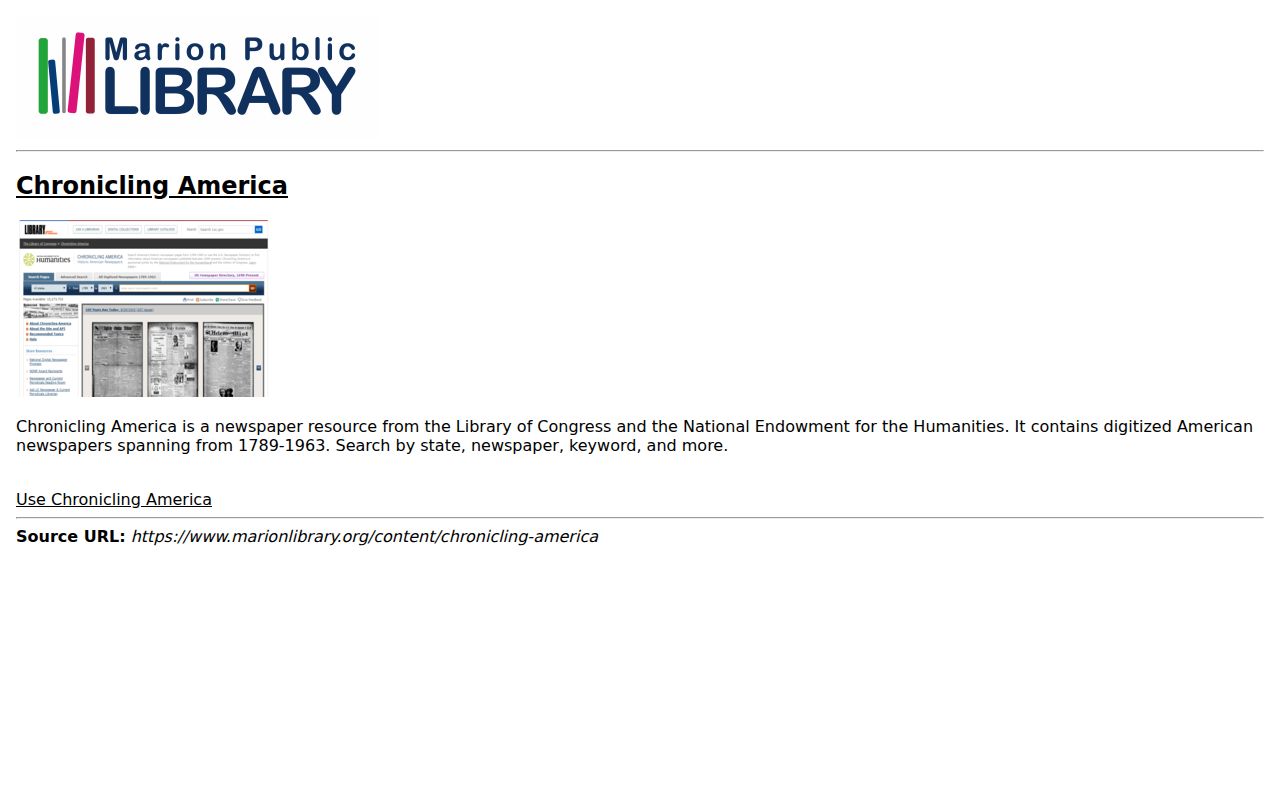
Use newspaper and obituary material to test a directory gap, and cite the newspaper title and issue date rather than treating an index hit as the final evidence.
Marion Township Past Residents and Maps
Marion Public Library offers Ohio Sanborn maps with stated statewide coverage from 1882 through 1962. Their city, town, and building detail can help compare a historical built environment with a directory or deed. The Library page does not identify particular Marion Township sheets or years. A rural or unincorporated parcel should never be assumed to appear, so check the database or ask Library staff before claiming map coverage for a property.
Maps are most useful alongside the legal description and parcel history. A street number can be assigned later, a subdivision can be re-platted, and a rural tract can be divided. No authoritative exact Marion Township street-renumbering year was found. Preserve older address notation, then use the deed description and Library context instead of forcing an old number into a modern map.
The captured Ohio Sanborn maps access page documents the Library route to this source.
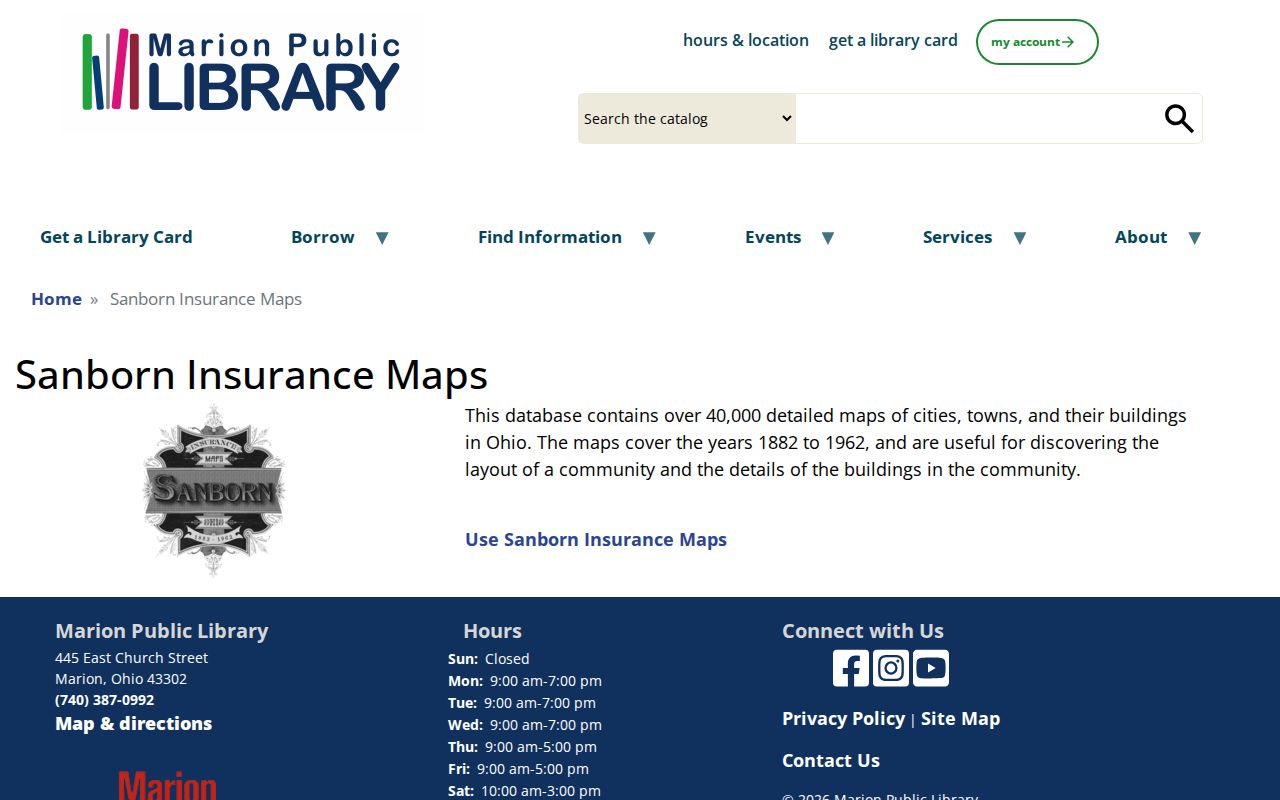
Confirm a sheet's actual place and year before using a Sanborn image to support a Marion Township address conclusion.
Marion Township Previous Residents Endpoints
For an older household trail, a cemetery or probate endpoint can resolve a question that deeds and directories leave open. The Township is responsible for Phillip Dreyer Cemetery and two closed cemeteries, while the Library lists cemetery records, obituary resources, military rosters, and family histories. The Township's Dreyer Cemetery history describes a claimed first burial in 1800, 52 identified burials, a last recorded burial in 1869, dedication to Township care in 1871, and restoration that began in 1993. It is a historical lead, not a public searchable burial database.
Ask the Township, Library, or Historical Society about surviving records instead of assuming online coverage. A cemetery reference can support a family-history question when paired with an obituary card, a probate packet, or a contemporaneous notice. It cannot establish a current address or the full set of people associated with a parcel.
The Township's Phillip Dreyer Cemetery history documents this local research endpoint.
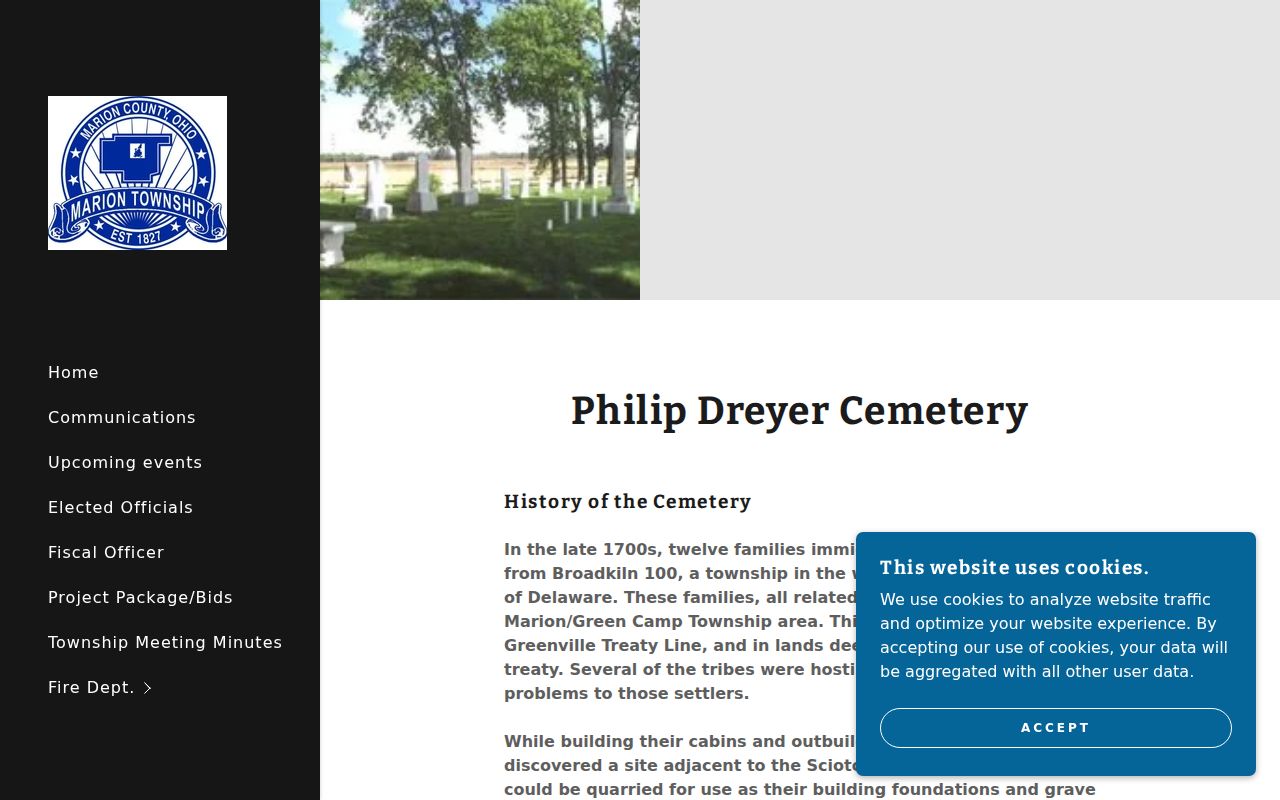
The cemetery history is most useful as a lead for a dated family or place record, followed by confirmation from the appropriate custodian.